A Turning Point

Tags

, , , , ,

It’s been one week. 

It’s been one week since a voice was silenced.

It’s been one week since a disciple was slain. 

It’s been one week since darkness tried to put out light.
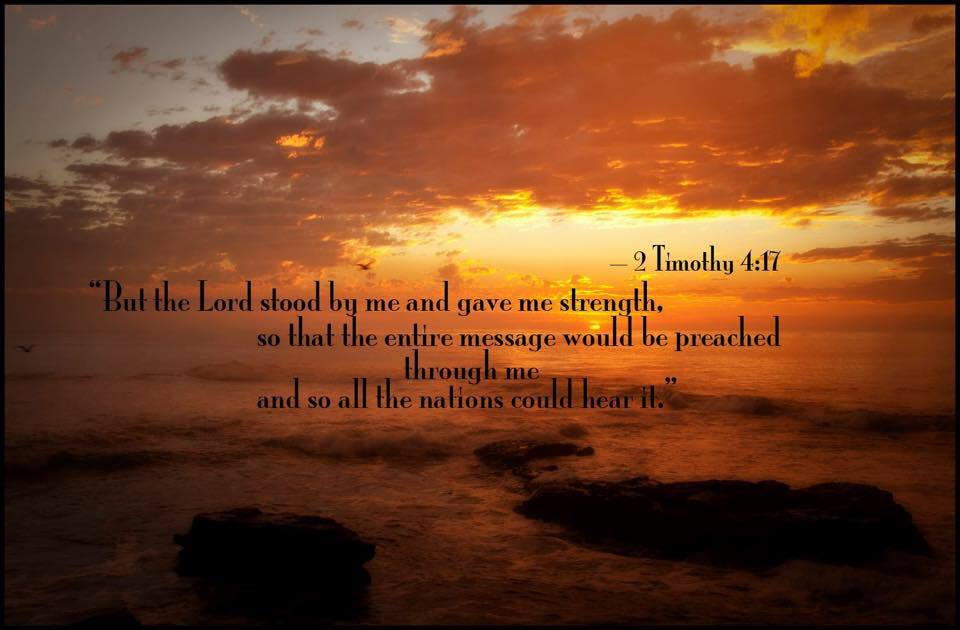
2 Timothy 4:17

But all that has happened is that the voice has grown louder; the disciple became a saint; and the light has grown even brighter. 

Throughout this week, a lot of my clients have shared their hearts about the assassination of Charlie Kirk. There has been a lot of anger and many tears shed. There have been a few clients who have asked some hard questions about faith. But the majority of people in my office over the past week have talked exclusively about the spiritual warfare they are feeling all around right now. A couple of folks even asked, “Am I crazy?” 

No, my friend, you are not crazy. 

“For our struggle is not against flesh and blood, but against the rulers, against the authorities, against the powers of this dark world and against the spiritual forces of evil in the heavenly realms.” (Ephesians 6:12)

We are in a spiritual battle and have been for a very long time. We know in scripture that demons and angels existed, and they still exist. But because we, as Christians, are anchored to Jesus, we know the truth. 

You see, our God is a God of order and distinction. He is the calm in the chaos. The first thing God does in Genesis is give us order. He created the heavens and the earth, then He separated them, making sense out of the senselessness. In the first six chapters of Genesis, God created all these distinctions that are now under attack today. The distinction between male and female, the distinction of human and nature, the distinction between the holy and the profane, the distinction between good and evil, the distinction between infant and adult. Satan’s goals have been to destroy those distinctions from which we get order, and that is what brings satanic chaos into our country, our communities, our schools, and our homes. 

So, yes, our battle is a spiritual one. There is no other way to look at it. Hate for Christ and the order that God created is what has driven the division and chaos within our country. Hate for Christ is what has driven the mutilation of children and the genocide of unborn children. So when the shot rang out that took the life of Charlie Kirk, it really did shake awake dry bones across, not just this country but around the world. The ground in Utah actually shook that day; the earth literally moaned as the evil was unleashed. 

Charlie was taken from us in a vicious act of hatred. Such an act defies full comprehension. How could we, finite and flawed, grasp the depths of such evil? Fear, anger, and confusion can easily overwhelm us. For years, I have sat with men, women, and children in their trauma. I have heard unspeakable stories in graphic detail, left to carry them into my own sleepless nights. But nothing has shaken me like this has. To feel the evil, not just in the violence of his death but also in the violence of the responses from people who deny Christ… as well as those who claim Him to be their Lord. Some have even been directed at me, with name-calling, threats, and insults. Yet, my encouragement is this: stand firm. Not in your own strength or fleeting resolve, but in Christ — His unshakable character, His eternal purposes that the battle is His battle and victory is His victory.

I know that the Lord is weaving something profound through this tragedy, in ways we cannot fathom. We should grieve the loss of a husband, father, courageous truth teller, and brother in Christ. Praise be to God, Charlie is now rejoicing in the presence of his Savior. But you and I? We’re still here. And because we are still here, we have a directive from Jesus Christ: Go and make disciples, baptizing people around the world, telling them everything that He has taught us. 

Yes, God is still using us. God is still active. Look around and you will see it unfolding right before our eyes. People are confessing their need to pray. People are returning to church after years of being absent. Lifelong atheists and agnostics are turning to prayer and purchasing Bibles. Many Christians who shared Charlie’s convictions are no longer hiding from fear of repercussions, instead proclaiming, “I don’t care if people reject me. This is God’s truth, and I’m proclaiming it because I love you and want you to be free from the sin that has imprisoned you.” 

Turning Point USA (TPUSA), Charlie’s organization, has been inundated with over 58,000 new high school and college chapter requests since his assassination. Videos of Charlie sharing the gospel on college campuses are spreading, and vigils honoring his legacy are being held worldwide.

In London, thousands flooded the streets, draped in British and American flags, holding signs that read, “We are all Charlie.” In South Korea, videos capture crowds chanting, “We are Charlie Kirk!” In Canada, Fox News reported massive gatherings singing the U.S. national anthem. Comments from Japan, New Zealand, elsewhere in the U.K., and beyond echo the same sentiment: “We’re hurting here, too.”

To quote Obi-Wan Kenobi to Darth Vader, “If you strike me down, I shall become more powerful than you can possibly imagine.”

I said this a week ago, and it’s been echoed by many tweets, posts, and proclamations. This is a turning point. Charlie’s passion for sharing the Gospel touched millions across generations and borders. I don’t believe he ever could have known the impact he had. But that’s often how it works, isn’t it? We don’t know the impact we might have, so we damn well better make certain we are on the right side of the truth in all ways. And the right side is God’s side. How do you know you are on God’s side? You don’t deviate from His holy word. It was, is, and always will be the complete truth, even if it’s hard; even if it hurts your feelings. 

I condemn the violence and evil that stole him from us, as well as the evil that seems to be more powerful than ever before. Yet, I praise the God who redeems even the darkest evil for good. Charlie Kirk’s death has awakened a lion in the hearts of believers. His death has ignited something inside of me. Through the sleepless nights, the countless tears, the aching heart… I know that the same God who has given me the courage to speak out even though persecuted for it, He is the same God who gave Charlie the boldness to live and die for the gospel of Jesus Christ. And if you think he deserved to die for his boldness in speaking the truth as found in the Bible, then so do I. 

Yes, this is a spiritual battle. But we don’t go into battle alone. God leads us. He has given us the armor we need to survive the battle, and His complete, inerrant word is the sword with which we fight. 

For Christians reading this, I hope you understand we’re living for “such a time as this.” We’re living in a moment that God can, and I pray does, use for revival. The author George Orwell once said, “In times of universal deceit, telling the truth will be a revolutionary act.” Disciples, let this define you. Proclaim truth. Stand firm in the word of God. Stand tall when evil threatens. Speak boldly, even when hatred seeks to silence you.

“So do not be ashamed of the testimony about our Lord or of me his prisoner. Rather, join with me in suffering for the gospel, by the power of God.” (2 Tim 1:8) Oh, to be a truth teller. It’s not for the faint of heart. Jesus didn’t sugarcoat the reality that we will be hated for our faith. He never glossed over the fact that standing firm in His truth would be a tall order. But it is more than exceedingly worth it. It’s what we were made to do

“But the Lord stood by me and gave me strength, so that the entire message would be preached through me and so all the nations could hear it. And I was delivered from the lion’s mouth.” (2 Tim 4:17)

May this be the turning point that wakes you up. No more hiding in the shadows, afraid to speak. Now is the time to speak against the lies, sin, and brokenness in this world.

“In the beginning was the Word, and the Word was with God, and the Word was God. He was with God in the beginning. Through him all things were made; without him nothing was made that has been made. In him was life, and that life was the light of all mankind. The light shines in the darkness, and the darkness has not overcome it.” (John 1:1-5)

What Is Church Hurt? Breaking the Silence on Spiritual Wounds

Tags

, ,

What comes to mind when you think about church?

A kind pastor with a gentle presence.

Piano or organ music.

Smiling faces and loving embraces.

The sounds of creaking pews or the rustling of old hymnals.

Photo by Brett Sayles on Pexels.com

Church is supposed to be a safe place for believers to gather, build relationships, and deepen their walk with God. But what happens when the very place you run to for comfort and safety becomes the source of your deepest wounds? Church hurt is real, and for too long, it’s been swept under the rug by church leaders, well-meaning parishioners, and denominational organizations. Today, we’re pulling it into the light—because what stays hidden can’t be healed.

The Biblical Counseling Coalition defines “church hurt” as the painful experiences faced when individuals are exploited within a local church setting. In these situations, spiritual language or even Scripture may be misused to justify harmful actions and protect those responsible. Additionally, church hurt encompasses instances where someone is emotionally, mentally, spiritually, or even physically harmed by one or more individuals within the church. This issue appears to be widespread, and in recent years, “church hurt” has gained significant attention on social media platforms and discussion panels among evangelical leaders.

What makes church hurt so painful is that it’s not just relational—it’s spiritual. It’s one of the most intimate relationships we find ourselves in because we know that our spiritual being cannot be hidden from God. In any other relationship, we subconsciously know that we might be hurt somewhere along the way. But the church is different. The people who wounded you weren’t just friends or acquaintances; they represented the body of Christ in your life. When they failed, it felt as though God failed. When the very people and institutions that should protect us betray us, we are often left in a rubble of disappointment, disillusionment, and despair. 

Throughout the Scriptures, we are told story after story about the challenges of making disciples of Jesus Christ. The Apostle Paul said it best. “In hard traveling year in and year out, I’ve had to ford rivers, fend off robbers, struggle with friends, and struggle with foes. I’ve been at risk in the city, at risk in the country, endangered by desert sun and sea storm, and betrayed by those I thought were my brothers (2 Corinthians 11:26 MSG).” 

After almost 20 years of serving in full-time ministry, I have experienced my share of slings and arrows from the Christian community. But each year I continue to serve brings with it a constant reminder that loving and serving God’s people is a risky business. We can be deeply hurt by those we love, but you are worth the risk. 

Many people in our church services have been directly impacted by a moral failure of a former pastor, church infighting, a toxic church environment, or a manipulative friend misusing the name of Jesus. Scriptures have been used to justify abuse, shame, and condemnation, causing the abused to simply walk away altogether, not just from their church but from the faith.

How do we heal after being betrayed by those we trusted? How do we walk with those who have not only been hurt by the Church but also abused by spiritual leaders? How do we find the strength to try again after several attempts to find a healthy church family? Many church leaders are internally asking the same questions as they are also trying to minister to those who are considering leaving not only their church, but their faith altogether.

Psalm 34:18 tells us, “The Lord is close to the brokenhearted and saves those who are crushed in spirit.” God isn’t indifferent to your hurt. He sees it, He grieves it with you, and He longs to bring healing.

Church hurt is the worst kind of hurt. It’s like getting stabbed in the back while the person holding the knife is looking directly into your eyes. When the very people and institutions that should protect us betray us, we are often left in a rubble of disappointment, disillusionment, and despair. 

Many people in our church services have been directly impacted by a moral failure of a former pastor, church infighting, a toxic church environment, or a manipulative teaching of scripture to justify abuse or shame.

So what do we do when the hurt has seeped in and we are unable to stop the constant flow of pain?

After Paul gives us his long list of ministry woes in 2 Corinthians 11, he continues in Chapter 12. “I do admit that I have fears that when I come you’ll disappoint me and I’ll disappoint you, and in frustration with each other everything will fall to pieces — quarrels, jealousy, flaring tempers, taking sides, angry words, vicious rumors, swelled heads, and general bedlam” (2 Corinthians 12:20–21 MSG). 

From the beginning of the Acts church, there has been a fear of hurt and disappointment. Church is made up of imperfect people, after all. So how do we work alongside a perfect God to build His Church alongside Him, while simultaneously healing and helping others heal? 

Paul gives us some direction in 2 Corinthians 13 (MSG). 

1. Test yourselves to make sure you are solid in the faith — Where has the enemy caused confusion and chaos in relationships, your prayer life, conversations, and situations? Have you done the hard and holy work of pursuing personal healing through counseling, prayer, fasting, repentance, and forgiveness? Ask yourself, “Is my faith in Jesus Christ solid or has a season of disappointment and hurt cracked my once solid foundation?” 

2. Don’t drift along, taking everything for granted. Give yourselves regular checkups — Sometimes we have to leave a church to stay with Jesus, but don’t stay gone for too long. Pursue a new biblical community under a safe shepherd. Pursue daily time in the Word of God, reflecting and resting, worshipping privately and corporately, and staying in close connection with mentors and those who love you. Church doesn’t have to look like it always did, but you need a community that will hold you accountable to those regular checkups.

3. Don’t just put up with your limitations; celebrate them — Paul boasts of his weaknesses because in them God’s great strength is revealed. Celebrate the thorn in your flesh and the scars that have become your testimony. What you have walked out — the hurt, the abuse, the disappointment — will help others share their stories and invite them to know a Jesus they have always wanted to know who doesn’t punish us for weakness but shows up in greater strength! Silence is the enemy. Sharing your testimony is healing for you as long as it’s not an act of revenge. Speak of your victory in Jesus Christ.

4. Allow God to demonstrate his supernatural strength in your life — Paul ends with this, “And that’s about it, friends. Be cheerful. Keep things in good repair. Keep your spirits up. Think in harmony. Be agreeable. Do all that, and the God of love and peace will be with you for sure.” 

As I said earlier, being in ministry… whether as a pastor, a volunteer, a mentor … it is risky. We risk hate from nonbelievers and we risk pain from fellow believers. But it is worth the risk. You are worth the risk. Every time we choose to cross the threshold of a church building after a season of hurt, we are reminded that the Body of Christ is worth the risk because He made us so through His death and resurrection.

Maybe there is a part of you that yearns to be in a church community but another part of you wants to simply run away. Cling to God. He has positioned you to be a voice for the voiceless even when it’s scary or painful. Ask the Lord for wisdom to know when to stay and when to go, and believe he is with you in the coming and the going, the beginnings and the endings. 

If you or your church is experiencing hurt, you don’t have to walk through it alone. Reach out to The Ephesians 612 Group to restore hope, truth, and peace in your troubled community of believers.

Quote

Your Tears Matter

Tags

, , , , ,

I was sitting in a local coffee shop recently waiting for a friend to arrive. There were several people there laughing and chattering. As I took in my surroundings, I noticed that in between the loud laughter, they would lean in to share with one another. And on their faces, in the midst of the whispers, was an etching of pain. I could see it because I felt it, too. Not long after my friend, she asked me, “So, how are you doing really?” The lean in happened and then the tears started to fall. I can’t even tell you where they came from but in that moment, I felt both relieved and ashamed. I’m the counselor. I’m the one who has the answers. I’m the pastor. I’m the carrier of everyone else’s pain.

There is a lot of pain in the world right now. I know this isn’t surprising to anyone but seriously, there is a lot of pain. One person after another comes to me expressing pain so deep they can’t articulate it. And it too often leaves them feeling invisible, alone, forgotten.

But guess what? God sees your tears. And He sees mine, too.

I believe God put Psalm 56 in the Bible for people who feel forgotten in their pain. This Psalm says that every tear David has cried, God has placed in a bottle. It’s this intimate imagery that God is near in our hurt. The God of the universe, hearing millions of prayers at any given time, is aware of every tear that leaves your eyes.

You have kept count of my tossing; put my tears in your bottle.

Are they not in your book?

This I know, that God is for me. In God, whose word I praise, in the Lord, I shall not be afraid.

Just let that sink in for a moment. There is not a single drop that has fallen from your eye that God has not seen. Ever. Every burden, painful moment, and anxiety you have faced, God knows about it.

WHY WOULD GOD CARE?

Are you one of those people who thinks crying is a sign of weakness? Maybe you heard as a child to “stop crying.” Or, “big boys/girls don’t cry.” If crying is wrong, why do we do it? Why would God create a body so intricately made, with such amazing abilities, to have tears?Why would God create a physical response to coincide with our emotions? I think He doesn’t want us to be alone.

When I was crying on my friend’s shoulder, she wasn’t telling me to be quiet, suck it up, or that it would be okay. She just sat in the silence with arms outstretched. It was as if God Himself were there in that moment holding on. There’s a scene in the 4th season of The Chosen when Thomas is about to lose his mind in grief and Jesus is standing there. Thomas looks up and it’s as if the entire world melted away as he fell into Jesus’s arms. No words just love. It’s a beautiful scene depicting the love we can feel from God.

Think about how difficult pain is when you are alone in it. We all secretly crave for someone to walk with us in our pain; to simply be there in the midst of the heartache. But too often we try to hide it from the very people God has sent to be a support system. But it’s our tears that communicate what we often can’t say: “I need help. I need love. I need a hug.” If they speak of our pain to those around us, how much more do they speak to God?

I think Psalm 56 is important because we need to know that God isn’t a god of just words. He is a God of action. He says, “I not only see that you have pain, I am going to keep a record of it because you are that important to me.”

Is there any other god that people worship who love like that? NO! Our God tells us that He is aware of every tear we cry. And every tear we suppress because of some silly idea that we aren’t supposed to shed tears because it’s silly, weak, or foolish is simply preventing us from fully feeling the love of God through those He sends on our path.

BUT DOES HE REALLY HEAR

God is not oblivious to the brokenness in our heart. He is not apathetic to our pain; those moments when we cry out that it’s not supposed to be this way or that way. He doesn’t pick and choose which struggle or pain He will walk with us through. He’s there for it all because He understands. Because Jesus felt the hurts we feel. (Hebrews 4:13-16)

Jesus was sometimes lonely.

Jesus experienced abandonment from God on the cross.

Jesus felt the overwhelming anxiety in the garden when he was sweating blood.

Jesus lived day after day with people who doubted who He was, constantly being misunderstood.

Jesus wept at the loss of his friend, Lazarus.

In God, we do not have a king who is so lofty and above our difficulties that He scoffs at our tears with disdain. No, we have a King who has descended into the pain with us. You do not cry alone.

Jesus hears you. He sees you. He weeps with you. We have his promises to comfort us and to help us trust in the Lord when it is difficult to see the reasonings and the whys. And for those of us who know the Lord as our personal savior, when we take our final breath, we will hear with our own ears and feel on our own faces, the gentle hands of God, wiping away our tears—

And I heard a loud voice from the throne saying: “Behold, the dwelling place of God is with man, and He will live with them. They will be His people, and God Himself will be with them as their God. He will wipe away every tear from their eyes, and there will be no more death or mourning or crying or pain, for the former things have passed away.” And the One seated on the throne said, “Behold, I make all things new.”

Photo Credit: Marina Pechnikova on Pexels.com

What’s Wrong With The World?

Tags

, , ,

grayscale photo of woman covering her face by her hand
Photo by Alexander Krivitskiy on Pexels.com

Do you ever just find yourself looking at the world around you and think, “What in the world is happening?” It seems as if everything is just off. What used to roll off the backs of people now sets them off. The things that glued us to the news, we are now numb to it. People are more agitated, fearful, distrusting, and isolated than ever before. And we all feel it.

But what about our kids? How are they coping?

In a word… poorly.

According to CDC statistics released in March 2022:

  • More than 1 in 3 high school students experienced poor mental health during the pandemic.
  • Nearly half of students felt persistently sad or hopeless.
  • Two-thirds said they had difficulty with understanding or concentrating on schoolwork.
  • More than half of students experienced emotional abuse in their home.
  • A quarter of teens struggled with hunger.
  • Female students were more than twice as likely to have attempted suicide compared to male students.
  • 19.9% of students had seriously considered attempting suicide, and 9.0% had attempted suicide.

While it’s true that so many people young and old are struggling more mentally than before the pandemic, it’s the youth who seem to be a more steady decline. Before COVID-19, suicide was already reported as the second-leading cause of death among people aged 10–34, and the CDC reported that youth mental health was already declining. But since the start of the pandemic, the state of youth mental health has undoubtedly worsened.

How Did We Get Here?

Between the constant comparisons and challenges to keep up with the pressure to perform on social media; the expectation of being “always on” that comes with technology, instantaneous communication and troubling news cycles; the lack of God and His word within the home and/or school; and the isolation, uncertainty, and trauma and grief that have come from an unprecedented global crisis… Young people today are being challenged in ways we couldn’t believe.

For lack of a better way to say it, our youth are in a mental health crisis.

Unfortunately, the way youth respond to their emotional situation is often difficult to predict. Some act out in violence, seeking attention in ways that are completely out of their normal behavior. Some become hypervigilant, fearful of making a mistake, leaving their safe spaces, or making friends. Others might isolate, withdrawing from family, friends, and things they love. Let’s face it, in more instances than we care to accept, our kids feel more safe in their rooms on a computer screen than out in the “real world.” We did that to them. We took away their schools, their friends, their church, their extracurricular activities and stuffed them in their rooms while we spiraled into our fear-based abyss. And even though we have begun to see a bit of normalcy in our daily choices, our kids don’t know how to step back into a world with face-to-face interactions. It’s a lot. And too often we say to them, “Just suck it up. You’re young; you can handle it.”

Reality check … they can’t handle it! They don’t know how and we aren’t helping them. So they do what they know… they learn from us. If you are an adult who doesn’t talk about your feelings, neither will your kids. If you act out in violence, so will your kids. If you don’t pray to God, neither will your kids. Our youth are looking to us for leadership. They want to know how to handle things and we simply are letting them down because WE aren’t handling things well at all.

The Church Response

Recently, a 14-year-old said to me, “Is there anywhere we can go where we feel safe and can just be kids?”

That question nearly crushed me. Because the truth is that there is no where any of us can go in this world and not be touched by evil in some way. It’s infiltrated our homes, churches, schools, businesses, governments, sports… the list goes on and on. Evil is something humankind has encountered since the Garden of Eden. And the only response to evil is God.

I can’t help but wonder where our churches are because they aren’t stepping up. As a whole, churches have dropped the ball on the basic premise of providing hope to the hurting world through the spreading of the Gospel. Churches have become, instead, a place of entertainment, political activism, and acceptance of sin. We can’t accept this any longer as Christians. When we said yes to Jesus Christ’s invitation to eternal salvation, we also agreed to the Great Commission: Therefore go and make disciples of all nations, baptizing them in the name of the Father and of the Son and of the Holy Spirit, and teaching them to obey everything I have commanded you. (Matthew 28:19-20)

Our kids are desperately seeking hope because they are living in a hopeless world. If we don’t share with them “to obey everything [Jesus has] commanded” we are complicit in the suicides, school shootings, gang violence, pornography, unwanted pregnancies, gender confusion, bullying, and more. It’s their blood on our hands if we stay quiet about the very thing they need to know most… sin. Sin is what separates us from God. If we don’t know what the sin is, how can we ever expect to grow close to Him to have the very hope we are most seeking?

What can you do?

Listen. Stop trying to talk AT your kids or simply brushing their concerns aside as if they’re not important. Really listen to your kids. Create a space in your day when you put your phone down, turn off the TV, and just listen to your child. What was great about their day? What wasn’t so good? Why? How are they doing? Is there something they are struggling with? These are just a few questions parents can ask and then just really listen to their answers. If more parents did this, more young lives would be saved.

Make God important in your life. If your kids see you studying the word of God, praying, attending church, and spending time with others studying God’s word, they will see how important that relationship is in their own life. But if your priorities do not show God at the top every day, then neither will your kids. God is always there but the relationship can only happen if you nurture it.

Set boundaries. Believe it or not, kids prefer rules over free-range parenting. God set a clear boundary with Adam and Eve and they broke it. We are still paying for those consequences. Set clear boundaries with your kids. Be nosey about their electronic communications. Don’t let them stay behind a closed bedroom door all the time. Monitor their friends. Be the parent! The friendship comes once they are adults.

Ask for help. Believe it or not, parents don’t know everything. Not only that, but as a parent, you are more invested in your child than anyone else in the world so it’s sometimes difficult to be unbiased when they are going through things. That’s why therapists exists! We are the unbiased professionals trained to help people navigate difficult situations. There is no shame in talking to someone. In fact, seeing a therapist is as normal as seeing a physician. So, if your child is struggling, ask if they would like to talk to a therapist. And if they come to you can say they want to go to counseling, applaud them for taking an active role in their mental health and then act upon their request. And vet the therapist. I love it when parents want to meet with me. You’re trusting your child with someone so you need to know who it is. If you want Christian counseling, make sure the therapist follows scripture. If you need a trauma specialist, ask for their experience working with trauma. Ask questions and then make a decision.

It is easy to throw statistics and what-ifs at you. But it’s the kids we have to really focus on. Our youth are lost and we are the ones who are supposed to be guiding them. It’s time to step up and do the hard work. If you know of a young person struggling, please reach out to First Step Counseling. If you or someone you know is contemplating suicide, please call 988. Someone is available 24-hours a day to help you. You are not alone.

Betrayal Trauma and the Church

Tags

, , ,

The Lord is close to the brokenhearted and saves those who are crushed in spirit.– Psalm 34:18

person hand reaching body of water
Photo by Lukas on Pexels.com

When violence, physical or emotional, is witnessed or perpetuated against someone, trauma is often the outcome. The spirit and sense of one’s very being become crushed.

For Christians, of course, trauma is of great concern.  Jesus came to heal and to bring justice, as well as to invite us into his perfect eternal kingdom, where pain and sadness no longer exist. Jesus is the one who takes dead things and brings them to life:

For the Lamb at the center of the throne will be their shepherd, and he will guide them to springs of the water of life, and God will wipe away every tear from their eyes (Revelation 7:17).  

We are promised life through living water.

Therefore, all the sexual, physical, and emotional abuse and violence all around us are opportunities for our faith to provide a haven. They are also opportunities for the church to be an incubator where the very being of our personhood might come back to life again. Unfortunately, trauma is often ignored or hidden, even in the church.

Approximately 60% of the US population has experienced at least one traumatic event and 1 out of 3 will develop PTSD. It is highly likely you or someone you know has experienced trauma: physical, emotional, spiritual, or sexual.

As a Clinical Certified Trauma Professional, I spend my days walking with men, women, and children who have experienced some type of trauma. There is one type of trauma that I am seeing more of that people may not be as familiar with—betrayal trauma.

If someone close to you has ever broken your trust, you’ve probably felt the sting of betrayal. Regardless of the infraction, betrayal can leave wounds. But betrayal trauma goes a step further, leaving deep wounds that can feel impossible to heal because you’ve been betrayed by someone or group you trust. Betrayal trauma is a type of trauma that refers to the pain and emotional distress that occurs when a trusted institution, loved one, or intimate partner violates someone’s trust. Betrayal trauma may occur alongside things like gaslighting and lead to anxiety and depression. However, through the grace of God and good therapy you can heal from this trauma.

Types of Betrayal Trauma

There are four different types of betrayal trauma.

  • Parental: When a parent or caretaker, someone you depend on for your needs to be met, abuses you or fails to protect you from harm.
  • Intimate Partner: When the person doing the betraying is your intimate partner. This can take place when your partner is having an emotional affair or a physical affair. If one of the partners has an active sexual addiction, there is often betrayal present.
  • Institutional: When an institution impacts you in a way that is in direct opposition to what they portray themselves to be or their stated mottos and goals. This can also occur when the institution protects the perpetrator instead of supporting the victim or “whistleblower.” This may include a religious institution, educational institution, the military, healthcare systems, etc.
  • Interpersonal: When a trusted friend, peer, or individual betrays your trust.

Betrayal trauma occurs when a person or an organization that you depend on goes outside your expectation of them in a way that is hurtful to you. The amount of trauma caused has to do with the impact on you. If your car gets rear-ended in traffic, your level of trauma may not be as profound as if you were to find out that your spouse of 20 years has been carrying on an affair with your best friend.

Betrayal trauma is the trauma that results from betrayal by a trusted person or institution. Betrayal trauma theory seeks to understand how an individual will interpret that betrayal and store it in his or her memory. This theory predicts that the more necessary a person or institution is deemed to be in a person’s life, the more likely there will be an “unawareness” or “blindness” to that betrayal. Third party observers are often left wondering, how can they not see what is happening?

We can’t blame those who are the victims of this type of trauma because too often they are unable to see it until the pain is too profound, and the damage is done. But, as Christians, we can do much more than we currently are to help in the healing process.

How can the church be The Church?

1. Be a caring community.

There is one fundamental way in which the church as the Body of Christ can be critical partners to the mental health community in a survivor’s healing journey. Trauma survivors need to be seen, valued, and connected to a caring community. The church is called to be the living body of Christ, and that is spiritual work. Because trauma survivors need to feel safe, the church commits itself to provide shalom love and gracious hospitality.

Any kind of trauma changes the body so that the traumatic experience gets trapped inside a person. The church can create an environment that gives the individual body a chance to heal.  The church and her leaders need to learn to be listeners, receiving the stories of trauma survivors. Just simply listening and bearing witness to the truth of another’s experience is a significant step in the healing process.

It’s not easy to be a listener. It can feel very heavy. But we must remember that Christ’s Light is unquenchable—and darkness can not overcome it. And that is the gift the church can give back to those in need.

2. Refuse to excuse or explain away abusive power.

Every church should develop policies that assure no tolerance for any type of sexism, abuse, or bullying. The church should have the highest ethic for treating people with respect and have the highest motivation for protecting the vulnerable. When we, as Christians, live our lives reflecting our beliefs, we become a true refuge. If we show tolerance of evil, either through our actions or words, we perpetuate the trauma and potentially drive someone away from God.

3. Have a relationship with the mental health community.

Churches that are advocates for trauma survivors preach the Gospel and have a collaboration with mental health experts. There are many things churches are good at, but mental health counseling is not one of them. Too often, spiritual leaders step out of their lane into areas they need to refer out. But when a church finds good Christian therapists who are clinically licensed, they are exhibiting the love of Christ but ensuring the best for the ones in need.

4. Encourage people to talk to Jesus about their pain, trauma, abuse, and healing.

It’s so heartbreaking to talk with those who have experienced betrayal trauma and they are unaware they can rely on God’s strength. Churches should encourage constant communication with God. And it’s truly quite simple to have prayers and verses available to give to those who are in need but don’t know where to even begin.

  • A trauma victim’s prayer: Be merciful to me, O God, be merciful to me, for in you my soul takes refuge; in the shadow of your wings, I will take refuge, until the destroying storms pass by. Psalm 57: 1
  • A trauma victim’s hope: God sustains me in a desert land, in a howling wilderness waste; God shields me, cares for me, guards me as the apple of his eye. As an eagle stirs up its nest and hovers over its young; as it spreads its wings, takes them up, and bears them aloft on its pinions, the Lord alone guides meDeut. 32: 10-12a 

In Colossians, Paul wrote to those who believe:

For you have died, and your life is hidden with Christ in God. When Christ who is your life is revealed, then you also will be revealed with him in glory. (Col. 3:3-4)

The trauma survivor is not crushed. Within the survivor is a life hidden with Christ and in God. That is a powerful reminder of the hope and healing that comes from God Almighty. The church can provide sanctuary, a place hidden with Christ in God for all who have suffered from any type of trauma.

“Then they cried to the Lord in their trouble, and he delivered them from their distress. He brought them out of darkness and the shadow of death and burst their bonds apart. Let them thank the Lord for his steadfast love, for his wondrous works to the children of man! For he shatters the doors of bronze and cuts in two the bars of iron.” — Psalm 107:13-16

Lamenting in Faith and Suffering

Tags

, ,

It’s been nine years to the month when life seemed to just bottom out. Nine years. It’s really hard to believe that nearly a decade has passed. It’s even harder to believe that I find myself here once again.

In June 2013, my family and I received the news we were really hoping to avoid. Not enough of an income meant we would lose our forever home. It was such a horrific blow. That house was the place of so many firsts for us. It was our safe place. Our memory-holder. Our home. And we could no longer call it ours. Earlier in that year, my husband had lost his job and had been unable to secure employment since then. I was working but a therapist makes peanuts so my paycheck couldn’t keep up with the monthly expenses. We were forced to wave the white flag.

I remember going through different waves of emotions. Why was this happening? Where was God? When would it end? We lost several friends during that time whom we believed were true and solid in our lives. But some people don’t like messy. And we were definitely messy during that point. On the other hand, we also discovered some friends we never really knew we had. People who walked with us in our messiness and didn’t mind getting a little dirty along the way. And we saw God. Often.

It was a very difficult time. I can remember literally counting coins in order to pay for things we needed but then out of blue, in the most difficult of moments, God provided. There were times when I wondered if we would ever feel anything other than sadness again and then God would give me a glimpse of the joy I possessed deep within because of Him. It was a long road.

But time goes on. The sun kept shining. The earth kept spinning. And we eventually found our way back to a place of normalcy. We stopped merely surviving and began living again. And we were very thankful to God, giving Him all of the glory for the successful climb out of our deep pit.

Somewhere during this past decade, we lost sight of an important lesson Jesus taught. Just because we’ve already been through a trial, that didn’t exempt us from future trials, no matter how close we walk with Jesus Christ.

In Matthew 5:45, Jesus said, “{God} makes the sun rise on both good and bad people. And he sends rain for the ones who do right and for the ones who do wrong.”

If you are anything like me, that isn’t a verse you spend a lot of time on. I mean, seriously, I’m a good person and do the right thing so God’s sun will shine on me, right? Yes, but so will the rain… and wind… and the thunder and lightning. The bad doesn’t stop just because the good is there. As Jesus said, “In the world, you will have tribulation…”

Unfortunately, I was not prepared for more tribulation in my life.

Last week, my husband’s work contract came to an abrupt end. No warning. No time to make plans. Just an ordinary Wednesday that would become a mass of chaos with one phone call. “And he sends rain for the ones who do right and for the ones who do wrong.”

Blessings surround me.

I see them.

I give thanks for them.

But… I’m angry.

I cannot count the number of times I have said to God, “I love my life. Thank you.” After the turmoil of 2013, life was pretty simple but very good. We were able to buy a home after house-hopping for a few years. It’s a cute little house nestled into some trees on a hillside. We’ve made some renovations and put lots of love into it. It’s become our home and we love it. We’ve managed to take some family trips to the coast. That’s always been my favorite getaway. We go out to eat more than we should and we buy things we definitely don’t need. But it has been a pretty simple life over these past few years.

I am a business owner and really proud of the work I do in the mental health field. Honestly, I give away a lot more than I make. I love my patients and desire to point them to God in the midst of the struggles they are in. My husband poured his heart and soul into his patients. It was a specialized practice focused completely on substance abuse treatment. His passion for it comes from his experiences surviving it. He didn’t just see his patients, he empathized with them. He listened and he gave them hope. Between the two of us, we spent most of the past few years dedicating our lives to serving God by serving his hurting world.

So the question that immediately sprung to my mind upon hearing the news was, “Why God?”

It’s too easy to get into the mindset that the bad stuff can’t touch me because we’ve already had our fair share of it. How completely vain for me to think that. What promise has God ever made that the bad stuff has a limitation? None! And yet, I was walking through life as if I was somehow immune of any further tribulation.

C. S. Lewis said, “There is no such thing as a sum of suffering, for no one suffers it. … If tribulation is a necessary element in redemption, we must anticipate that it will never cease till God sees the world to be either redeemed or no further redeemable.” (The Problem of Pain).

And there it is. Tribulation is necessary and my family is definitely not immune. But dang it, it is hard to live in the constant void of the unknown. It’s difficult to describe what it’s like. There is just a constant feeling of walking a high wire over a bottomless cliff.

“I am worn out from my groaning. All night long I flood my bed with weeping and drench my couch with tears. My eyes grow weak with sorrow; they fail because of all my foes.” Psalm 6:6-7

For several years I cried this lament daily. I felt David’s anguish when he said, “My God, I cry out by day, but you do not answer, by night,I find no rest.” And to be honest, I’m not real thrilled about experiencing that anguish again. Unfortunately, you can’t stop this stuff from coming. And with it comes anger and even some doubt.

I may feel David’s cries of “My God, my God, why have you forsaken me?” and think, “I should not feel this way! I am losing my faith!”But my lament is in good company with our spiritual fathers and their faith journeys.

In the Scriptures, faith is not simply an intellectual feeling. It is the trusting of my entire being to God. At times, we all will likely experience God’s absence; and right now I certainly feel alone and confused. So doubt creeps in.

But praise be to God, doubt is not opposed to faith; despair is. When the father in Mark 9 brought his son to Jesus for healing, Jesus encouraged the father to have faith. He replied, “I do believe, help my unbelief!” (Mark 9:24). Yes. That is the conflict.

Even Saint Paul tells us he was “perplexed, but not driven to despair” (2 Corinthians 4:8). In despair we give up on our relationship with God. Doubt, on the other hand, is a sign that our faith is alive and kicking; it is part of the rhythm of faith itself.

Lament is not a failure of faith, but an act of faith. We cry out directly to God because deep down we know that our relationship with God counts; it counts to us and it counts to God.

Even if I currently do not experience the closeness of God I want to feel, I believe that God does care. Even if God seems not seem to hear, I believe that God is always within shouting distance. In the Scriptures, God does not say, “Do not fear, I will take away all the pain and struggle.” Rather, He says, “You have no need to fear, since I am with you” (Genesis 26:24; Exodus 3:11-12; Matthew 14:27).

In this light, the “cursing psalms” make sense. They have often been a particular stumbling block. We need to recognize, first, that they are clearly spoken out of great pain and distress. The feelings are really in the psalms, and at times they are really in us.

God, this is the way I feel; I leave it to you. And even though God has never been known to do what I want or when I want it, I know the only way through this tribulation is to let God deal with it.

Although right now I can truly relate to many of the psalms and the anguish they spell out, almost all of the lament psalms end on a sudden turn to praise. We can’t leave that part out. It is only after we lament, after we face and express the pain and negativity and get it all out, that healing can begin. In more theological terms, we can say that it is only by facing and going through the death that we can come to new life, to resurrection.

The structure of lament tells us that it is possible to praise too soon. The psalmist takes the time to let all the pain and anger out before the praise can set in. So, today, I am not really ready to praise. But I will. I always do. He is forever faithful in his mercy and grace.

We are afflicted in every way, but not crushed; perplexed, but not driven to despair; persecuted, but not forsaken; struck down, but not destroyed; always carrying in the body the death of Jesus, so that the life of Jesus may also be manifested in our bodies. (2 Corinthians 4:8-10) This will be my praise. This is always my praise.

Please Don’t Say It…because I already know.

Tags

, , , ,

Just don’t say it. I know it’s meant to help. But seriously, don’t say, “You’ll be ok.”

Don’t say, “You must be so excited.”

Don’t tell me, “He is going to be just fine without you. You raised him well.”

Don’t give me platitudes about all of the reasons I should be happy, rest easy, or celebrating. I know all of this! But the truth is, I just can’t yet. I am not being silly. I am not being overprotective. And I’m not forgetting to count my blessings.

The truth is that all of these lasts are hitting me really hard and it hurts. It just hurts a lot.

My little boy is graduating.

Eighteen years ago I brought this tiny little human into the world, knowing his entire dependency rested upon my shoulders. I loved him before I knew him and the moment I felt his first little nudge, I pledged to move mountains for him. And now, he is leaving my nest and it is hard; very hard. Someone said that, “it’s not the end of the world” and I know that but it is the end of so very much.

That smile still can melt my heart!

It is the end of hearing the pecking of the keyboard as he fights to save the virtual world. It is the end of late night pizza cooking in the oven. It is the end of belly laughter as he and his friends solve the world’s problems. It is the end of soccer balls being kicked around the house. It is the end of hearing his footsteps as he comes down the stairs. It is the end of late night talks as he lays across my bed.  It’s the end of so much.

As I think about the future, I realize that even when he comes back, he won’t really be coming back. It’ll be a quick visit but nothing more.

He will be here but he will have one foot out the door.

College is going to offer him so much. New experiences that I’m not a part of, new friends whom I won’t know, and new challenges that I won’t always understand. He has always marched to his own beat but at least I knew the beat.

I have spent his entire life knowing where he was, what he was doing, who he was doing it with. His school was an extension of our circle. I knew his friends and their parents. His teachers were always a call away. I could sleep soundly because I new he was safe just down the hall. I knew he would be in church with me every week and would give God thanks over his food. I knew when he was hurting, when he was content, and when he needed to just be. I just knew. Now, I won’t know. I won’t know that he had rough day. I won’t know what his professors think of him. I won’t know if he can’t sleep or doesn’t feel well. I won’t know whose car he is getting into or dorm he is spending time in. I just won’t know.

I understand the concept of failure to launch. I’ve worked with several young adults on that very thing so I get the importance of letting him go and trusting in his foundation. I know that he will be successful. He already has proven his abilities in so many ways. But I also still see that little boy who would run to momma when he heard a loud noice or needed to kiss his booboo away. I still see a young boy who would spend hours building legos, tuning out the world around him when his young world was falling apart. I still see the young man who had his heart broken and just sat with me without saying a word. I know he survived all of it.

I also know that my heart is breaking into tiny little pieces at the thought of him leaving and the silence that will stay around.

The first of many lasts.

Someone asked me the other day if I’m ready for the next chapter in my life. What exactly does that mean? The life we have shared for over 18 years isn’t a chapter, it’s a book. It’s adventure. It is spiritual. It is funny and real. But that book is ending after 18 chapters. What comes next is a mystery and I’m not that thrilled to start writing it just yet.

Confirmation

My husband and I have spent 18 years loving, raising, teaching, and disciplining this miracle God trusted us with. I read somewhere that “to have a child, a body changes. It needs more sleep. It grows and adapts. To let go of a child as they transition into adulthood, a body changes, too. It cries and it grieves and it feels weightless and heavy at the same time.” Saying goodbye to my son is much harder than all the sentimental sayings make it seem. Because that’s what going to college is. It’s goodbye. And it’s trusting that I did everything God expected me to do to prepare him for this complicated, merciless world.

I know that in time, it will be ok. It’ll be better than ok because I’ll see him flourish into the man he dreams of becoming while continuing to grow from the roots planted from God.

See, I am doing a new thing!

    Now it springs up; do you not perceive it?

Isaiah 43:19

He is doing a new thing. And it’s going to be amazing to see the new thing that God does within my son’s life. But letting him go it isn’t easy to do. I think of John 16:33 and grow still with worry.  “In this world you will have trouble.” But I can’t forget the rest of the verse.  “But take heart! I have overcome the world.” I don’t want to go from knowing everything in his life to knowing very little but at least I can rest in the knowledge that God does know. I can’t go from seeing him every day to the occasional text, call or visit. But I can pray fervently for him, trusting that the Holy Spirit will speak to his heart. I can’t go into his crazy, messy room and be okay with not making sure he cleans it up or throws away the multitude of water bottles. But I can trust that he will hear my words when he can’t find his favorite hoodie. I can’t do any of the things that involve my son not being in my house, under my roof and under my protection. But God can and will because He has gone behind him, before him, and sometimes even carries him. I can’t do these things without pain and sorrow and tears. But God can.

So I will do it. I will hug him. I will triple check that he has everything he needs. I will hug him again. And then I will let him go off into his new world.

I. Will. Do. It. 

But I will cry. I will worry. I will wish with every fiber of my being that I could turn back time. I will grieve for that little boy while also rejoicing in his future. I will wish and pray and….hurt.

The day will come when I will find a new place in his life. I will always be his momma. He will always be my little boy. There will be new experiences and new memories. I’ll get to celebrate his successes and support his hard choices. I will be joyful in hope; patient in trouble; and faithful in prayer. I’ll be there always…but in a new way.

But for now, just don’t say it will be ok.

The Gift of Good-bye

Tags

, , ,

skinny teen walking on sunset road
Photo by Julia Khalimova on Pexels.com

God’s various gifts are handed out everywhere; but they all originate in God’s Spirit. God’s various ministries are carried out everywhere; but they all originate in God’s Spirit. God’s various expressions of power are in action everywhere; but God himself is behind it all. Each person is given something to do that shows who God is: Everyone gets in on it, everyone benefits. All kinds of things are handed out by the Spirit, and to all kinds of people! The variety is wonderful:

wise counsel

clear understanding

simple trust

healing the sick

miraculous acts

proclamation

distinguishing between spirits

tongues

interpretation of tongues.

All these gifts have a common origin, but are handed out one by one by the one Spirit of God. He decides who gets what, and when. — 1 Corinthians 12: 4-11

This morning, as I was sitting in church, the pastor said something that has resonated with me all afternoon. He was talking about the importance of truth in the midst of today’s culture. It seems as though even self-proclaimed Christians are denying Jesus, ignoring the inerrancy of the Bible, conforming to sin, and living spiritually reckless lives. He mentioned that many Christians know about the nine gifts we are given according to scripture but we are likely unfamiliar with the tenth gift; that is the gift of goodbye. Now he was saying that with a bit of humor because that isn’t listed in 1 Corinthians 12. But as I’ve thought about it, I do believe it is a gift God gives us.

Jesus and the man

The Gospel of Mark tells us the story of a man who encounters Jesus. This man ran up to Jesus and fell on his knees before him. “Good teacher,” he asked, “what must I do to inherit eternal life?”

This man clearly knows the importance of God’s kingdom and he understands that it is Jesus who holds the answer.

The man is focused on the right thing but he mistakenly thinks he has all the power to make it happen. Jesus obviously sees this discrepancy in the man’s question versus his heart.

“Why do you call me good?” Jesus answered. “No one is good—except God alone. You know the commandments: ‘You shall not murder, you shall not commit adultery, you shall not steal, you shall not give false testimony, you shall not defraud, honor your father and mother.’”

The man is eagerly agrees with Jesus: “Teacher . . . all these I have kept since I was a boy.”

He has worked hard; he has kept the rules; he has tried his best. It all looks good on paper. He is probably thinking he has this wrapped up and well on his way to the heavenly promised land.

Then an amazing thing happened. It’s easy to overlook it. Scripture says, “Jesus looked at him and loved him.”

Read that again.

This is the only man in the entire Gospel of Mark whom we are explicitly told Jesus loved. And that’s startling given what the love of Jesus looks like in this story.

 Jesus loves this man too much to allow him to continue in his self-deluded little world that says his hard work is the way to God. Jesus refuses to invite this man into further ego-driven beliefs that just because he has checked off all the necessary boxes, he is on the narrow path to God’s kingdom. Instead, Jesus issues a command.

In scripture, Jesus often spoke in parables. It wasn’t always easy to understand the basic point but not in this case. Jesus was direct and incredibly clear. And with this one command, Jesus undermines the whole foundation on which the man has built his life.

“One thing you lack,” [Jesus] said. “Go, sell everything you have and give to the poor, and you will have treasure in heaven. Then come, follow me.”

No negotiation, no misunderstanding. He must sell everything.

At this the man’s face fell. He went away sad, because he had great wealth.

And there it is. The crux of the man’s story. He had great wealth. Why is that important? Because Jesus demands it all. That is the command. Period. It’s not just a hard command. It’s impossible, and it was supposed to be.

It’s an important moment because Jesus loves the man—and he lets him walk away. Jesus doesn’t chase after the man or change the rules. He simply says good-bye.

Jesus demands it all.

True then. True now.

Why would Jesus make the price so high? Why would Jesus demand something that can’t be done? Not because he’s cruel and harsh, but precisely because Jesus is love.

You see, the man had reduced God’s commands to something he could achieve. It was like a daily checklist that needed to be accomplished. He couldn’t see that this wasn’t about works but rather it was about the heart. If the man had simply surrendered to Jesus in that moment, he could have honestly said to Jesus, “I can’t do it alone.” But his identity was wrapped up in things of the world therefore there was no place for Jesus in his life. Not truly.

So, how does this relate to today and even the “gift of good-bye?”

Think back to what Jesus said to the rich young man. “Go, sell everything you have and give to the poor.” It’s easy to react to that: Of course he doesn’t mean I should do that. That would be ridiculous and impractical. He was only talking to that man. He just means I should be more generous. Yes, I think I can manage to be a bit more generous. I don’t have to actually suffer.

And that’s precisely the problem. We find a solution to the problem of obeying the commands of God—but we aren’t obeying Him at all. We decide what scriptures to live by and what scriptures to ignore. We decide that things, places, events, people are much more important than our relationship with God. We affirm sin and water down hard words of God to avoid upsetting people. We cling to traditions instead of God’s Laws. Our lack of obedience to God is exactly why Jesus said to the man, “Go, sell everything you have.”

Every command found within the pages of Scripture will expose your worldly anchors if you stop and listen. It is uncomfortable. It is hard. But it is there, in that authentic place, that you will truly learn to whisper those two little words: I can’t.

I can’t continue making the choices I’m making. I can’t continue hanging with the wrong people. I can’t continue to water down my beliefs. I can’t.

Two and a half years ago, I said, “I can’t.” I could no longer be part of a denomination that denies the divinity of Jesus Christ. I could no longer keep quiet about the way God was being pushed out of that worldly institution. I could no longer serve alongside those who mock God by claiming He makes mistakes. I fell to my knees and said, “I can’t.” And in that moment, the Holy Spirit gave me the gift of good-bye.

“And if no one will … even listen to what you have to say, leave that place, and once outside it shake off the dust of that place from your feet. Believe me, Sodom and Gomorrah will fare better in the day of judgment than that place.” — Matthew 10:14

Shaking off the dust of some place or someone you love is not easy. But without the gift of goodbye, given by the Holy Spirit, it is not possible. I’ve watched as several people I know and love have embarked on these good-byes within their own lives. It’s heartbreaking but also freeing. The more you push away from the world and all that it stands for, the closer Jesus Christ is to your every breath. Jesus showed us how to love, even to the point of good-bye. And sometimes it is through our good-bye that we show the most love of all.

What about you? Are you like the man, clinging to the riches of your world? Do you find the comfort of disobedience easier than the discomfort of giving it all away? Perhaps it is time for you to say, “I can’t” so you too can receive the gift of good-bye.

Get Out Of My Head

Tags

, ,

the word thoughts on a pin board
Photo by Vie Studio on Pexels.com

The alarm clock’s obnoxious chime alerts me that it’s time to get up for another day. After trying to figure out a way to stay nestled in my warm bed, I finally push myself up knowing what’s next. I head to the bathroom where I remove everything that might weigh even the slightest bit and step on the scale. I catch myself holding my breath in anticipation of the number that will flash on the display. Just maybe this morning will be the morning when the number goes down. Maybe somehow, overnight, the weight loss fairy removed those unwanted pounds.

But no. The scale taunts me with the blaring truth that the number refuses to go in a downward direction. So I vow to do better in between the verbal assaults I lay upon myself. I won’t eat lunch today. I’ll throw out those chocolates. I’ll exercise as soon as I get home from work. And my resolve soon fades as my hunger overtakes my resolve.

The next morning, the alarm wakes me to another day. I crawl out of my warm bed and head to the bathroom where I remove off everything that might weigh even the slightest bit and step on the scale.
I hold my breath in anticipation of the number that will flash on the display. Maybe this is the morning. But once again, it isn’t.

Another day of promises. Another day of verbal assaults. This has become my life. And I absolutely hate this continuous shadow that never seems to leave. My life is consumed with what to eat and what not to eat. The guilt surrounding nourishment is enough to push my choices in all the wrong directions. And the thoughts I have about myself, my appearance, and my lack of willpower are tremendously destructive. I can’t seem to get back to the place I once was where I look in the mirror and see more than the physical person looking back at me. Instead, I see ugly, disgusting, fat, lazy, unwanted, unworthy, and without purpose.

Let’s be honest, these thoughts, they have nothing to do with food. I can go for days without eating and I still won’t feel any better about myself. Because I’m never going to be skinny enough, or pretty enough, or good enough … there will always be someone I feel I don’t measure up to. These thoughts are straight from Satan himself. He knows my weakness. He knows the things that I have placed before God and he uses those things to create a deeper crevasse between me and God.

It’s actually quite amazing how much power a thought can have. It can start out as something small but if left alone, it grows into something profoundly destructive. If you don’t take these thoughts captive, they will consume you. So you must decide right now, today, to change the story of the battle for your mind. 2 “Take captive every thought to make it obedient to Christ” — Corinthians 10:5.

IT’S TIME TO BE INTENTIONAL

Let’s start with identifying any thought that is deceptive. In other words, is the thought harmful or helpful? Sometimes the truth is uncomfortable but that doesn’t make it harmful. I’m overweight. It’s negatively impacting my life. It’s not a happy thought but it’s not a harmful lie, either. For me to say that I’m overweight and therefore unloveable is a harmful lie. But it’s a thought I’ve had more than a little and even believed way too often. It’s easy to coddle the thoughts that enter your mind. You have to examine that thought and say, “Hmmm. I’m not sure I can let you stay in my mind because I don’t see any evidence that you’re lining up with the word of God. And if you’re not aligned with His Word, then He didn’t plant this thought in my head.”

This is probably the hardest thing we are asked to do. Taking thoughts captive if they don’t align with the Word of God is hard because we typically trust ourselves. We trust the things we think and do. But we can’t just blindly trust that every thought is truthful. Too often, Satan is using our own insecurities to create spiritual doubt. That’s why we have to be intentional in our every thought.

Next, we need to change the narrative of our story. If my story doesn’t include constant fighter verses, then my story is not in alignment with God’s story. I’ve always struggled with memorizing verses but I think that’s because I didn’t fully understand the importance of having those words tattooed on my soul. But God’s Word is the sword we’ve been given to battle the enemy. If we don’t use His Word, we will lose the battle every single time. Memorizing scripture allows me to exchange the deceptive thoughts for thoughts of truth.

In Lysa TerKeurst’s new book, I’ll Start Again Monday, she said, “I had to get honest enough to admit I relied on food more than I relied on God. Food was my comfort, my reward, my joy. Food was what I turned to in times of stress and sadness and even in times of happiness.”

It was like she read my mind. And I hated this truth so much but it’s the exact thing I have been doing. For two years I’ve wondered in the dang wilderness, trying to battle these harmful thoughts alone. And honestly, the enemy has been winning. So, no more “starting again on Monday” thoughts. No more embracing my thoughts without comparing them to God’s Word. And no more putting food before God.

Praying before every meal isn’t enough. Pray about everything you eat. Ask God: “Please remove this craving of anything unhealthy so that I only crave you.”

There will be lots more tears and many more mornings of holding my breath as I wait to see the number on the scale. I’m exercising and trying to follow a nutritional plan; even going to see the doctor soon in order to ensure I’m doing everything I can to be healthy and honor the body God has given me. I’m also trusting that God will keep my thoughts healthy and will remove the false lenses from my eyes so I can see the woman He created rather than one I’ve come to loath. I’m a work in progress and thankful for the grace that comes from my creator.

In This Chair

Tags

, ,

There is just something about this chair. It’s the place where a thousand tears have been shed and laughter has been shared. It’s big enough to curl up in and comfortable enough to stretch out freely. This chair is the safe place people have come to in order to heal. It’s the uncomfortable place people find themselves when they need to be challenged.

It’s tough being a therapist’s chair. It’s a lot of responsibility. It must be comfortable enough to ease someone’s anxiety. It must be strong enough to hold their burdens. It must be firm enough to hold them up when they can’t find the strength. It must be water resistant to catch all of the tears. And it must be completely silent in order to hear the desperate whisper of a broken heart.

Oh the stories this chair could share.

In this chair, people tell their therapist everything. The things they are proud of and the things that overwhelm them with shame. And while sitting in this chair, it can seem like just talking isn’t enough. Yet, on the way home, your heart feels so much better.

There’s just something about this chair.

This chair has cradled the cries of the world in its methodical rocking. And as I’ve listened to these cries, I can’t help but extend a piece of me to each fractured heart. I pray with each person that they will feel God’s presence and healing as they share, cry, laugh, and sometimes scream in the silence of their soul.

The last several weeks, this chair has worked overtime. There has been so much pain here. As I listened to a patient share immense desperation, I could feel my heart literally breaking. I think I may have even taken a quick breath just to assure myself my heart still worked. And if this is what I’m feeling, imagine what God must be experiencing. He feels all we feel; experiences all we experience.

“You keep track of all my sorrows. You have collected all my tears in your bottle. You have recorded each one in your book.” —Psalm 53:8

Someone asked me once why therapy worked. It’s because within each one of us we want to be known; we want to be heard. And that’s what therapy really is, in a nut shell. It’s one person choosing to see and hear another person, even in the midst of their darkest moment. And that’s what we want from God. We want to know He sees us and hears us. We want to be known to Him.

The crippling part of emotional pain is the isolation that comes with it. When we experience pain our natural tendency is to shut everyone out. Satan counts on us to isolate ourselves from those around us. If Satan can use your pain to separate you from Jesus Christ then he is doing his job because he is constantly looking to devour and deceive (1 Peter 5:8).

There is nothing worse than experiencing a painful season and feeling unseen. It is a crushing sensation to experience heartache and feel as if nobody cares. I know, because I have experienced this before. We fall victim and believe that our season of pain is so unique that nobody could ever relate to it and that nobody will ever understand why we feel how we do. And the longer we feel that way, the more isolated and hopeless we can become.

I cannot tell you the number of times that someone sitting in this chair has said, “No one can understand. No one can possibly know what it feels like to hurt this much.” Oh, sweet child, there is someone who knows.

(Jesus) began to be deeply distressed and troubled. “My soul is overwhelmed with sorrow to the point of death.” —Mark 13:33

Jesus Christ, Emmanuel (God With Us), was overwhelmed with sorrow to the point of death. He was so deeply distressed and troubled that His sweat turned to blood. For us to ever think that our Lord and Savior cannot comprehend what we are going through is completely wrong.

Jesus knows all about pain and He knows your pain. He knows your depression. He knows your misery. He knows your thoughts. He knows your secret guilt. He knows your deepest fears. He knows you fully. Jesus is relational. He is close to the brokenhearted (Psalm 34:18). He heals and binds our wounds (Psalm 147:3). He is faithful and will do what He says (1 Thessalonians 5:24). Jesus is the epitome of love (1 John 4:8), He is forgiving (Matthew 18:21-35), slow to anger, gracious, and compassionate (Nehemiah 9:17). Jesus Christ, the Highest Priest and the only Savior of mankind, is all we need. In Him, there is freedom (Galatians 5:1).1

With all of the pain, self-doubt, desperation, and hopelessness that finds its way in this chair, I pray that each person also experiences the profound healing of Jesus Christ. I pray they know that God’s mercy is greater than anything the world can give. I long for each broken heart to be filled with the healing of the Holy Spirit. If you don’t feel like you can talk to God, find a chair. I promise that if it’s a good chair, you’ll have a good listener.

1Marcus Donaldson, God Knows Your Pain, 2019